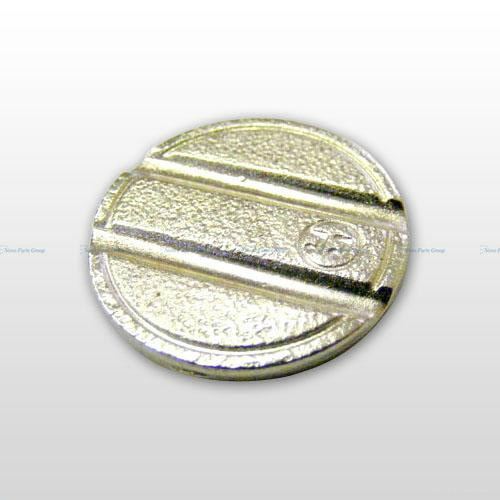
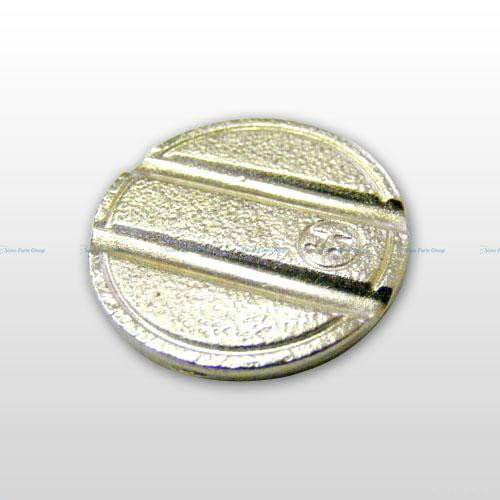
What are the technical specifications of the GETTO100-3 metal token, (Alberici 24 mm, 3+3 groove GT-1107)?
- diameter: 24 mm
- weight: 5.4 g/piece
- material: metal token
- groove pattern: multiple options exist, this item is 3+3
- availability: in stock (submit your interest list for exact commercial terms)
Where does a 24 mm metal token deliver value?
When you operate unattended payment workflows, a token can be an efficient way to control service activation and user flow. The GETTO100-3 metal token, (Alberici 24 mm, 3+3 groove GT-1107) supports repeatable mechanical handling thanks to its consistent diameter and groove geometry, which helps the system differentiate the token from mismatched objects. Typical use cases include access control, service start, parking and ticketing flows, car wash payment points, laundromat automation and other high-traffic environments where fast throughput and predictable material flow matter.
Why do groove geometry and consistent tolerances matter?
Operational stability depends heavily on dimensional consistency. A defined groove pattern supports mechanical identification and clearer separation logic, which can reduce false acceptance and improve transport stability inside the device. This is especially useful when you manage multiple installations and want the same behaviour and service routine everywhere.
Selection criteria: what should you check before you standardise on a token?
- diameter and weight: match the configured mechanics (here 24 mm and 5.4 g/piece).
- groove pattern: keep it consistent across your fleet to simplify operation and training.
- material and surface: prioritise wear resistance and corrosion tolerance for long duty cycles.
- process design: plan issuing, return collection, cleaning and inventory counting.
- safety stock: build buffer stock so peak periods do not get disrupted.
How do quality, maintenance and local technical support improve uptime?
Availability is not only about the component itself. Regular cleaning, visual checks of entry points and keeping operating conditions within the recommended range help reduce jams and misreads. Local service capacity, clear documentation and fast diagnostics shorten downtime and make rollouts easier when you scale across sites.
- scheduled preventive cleaning and inspection of entry and guiding surfaces.
- keeping temperature and humidity conditions stable, especially outdoors.
- standardised settings and service routines across locations.
- fast access to related parts and accessories for planned uptime.
Supply, logistics and payment terms: how to plan procurement?
Project timelines depend on availability, shipping options and payment terms. Local and european stock, scheduled inbound deliveries and staged fulfilment help align parts arrival with installation waves and keep inventory financing manageable.
- stock availability and scheduled deliveries for larger rollouts.
- selectable shipping modes, customs clearance and forwarding support.
- post-payment options and invoicing in foreign currency for predictable cash-flow.
- project-specific offers, samples and pilot batches.
CTA: add items to your interest list so you can decide later with full context
Even if you are solving only one part of a system today, it pays to collect components that may be relevant in the next iteration. Add the GETTO100-3 metal token, (Alberici 24 mm, 3+3 groove GT-1107) and related items to your interest list (cart), then submit the list at the end of your visit. This speeds up technical clarification and helps you get a project-aligned offer.
- select the tokens and accessories you may need.
- add them to your interest list (cart).
- submit the list at the end of your visit to align technical and delivery terms.
FAQ
Why is a metal token preferred in heavy-duty environments?
Metal tokens handle frequent use well, keep stable geometry and support predictable mechanical transport, which helps reduce jams and inconsistent acceptance.
What does the 3+3 groove pattern help with?
The groove geometry supports differentiation and clearer separation logic, making it easier to keep token handling consistent across sites and devices.
What operating practice reduces downtime?
Routine cleaning, visual checks at entry points, stable environmental conditions and a planned safety stock together support uninterrupted service during peak usage.
When should you request samples or a pilot batch?
If you roll out a new token process or compare groove options, a pilot helps validate mechanical fit and the handling process before scaling procurement.