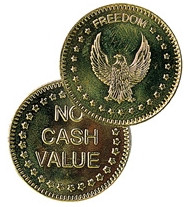
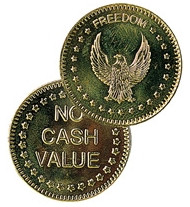
What are the technical specs of the token Eagle - freedom 29x1.8mm?
- product name: token Eagle - freedom 29x1.8mm
- item number: 80918004
- size: 29 x 1.8 mm
- unit weight: 9 g/pc
- purpose: coin-replacement token for coin validators and coin acceptor modules
- focus: consistent quality on reorders for predictable operation
Why do size consistency and weight matter for token acceptance?
Coin validators and mechanical acceptance paths react to small deviations in geometry. The 29 x 1.8 mm format and the 9 g/pc unit weight are baseline parameters you can align with validator tolerances. When tokens stay consistent across batches, you typically see fewer channeling issues, fewer unexpected rejects, and less downtime. That stability is valuable wherever throughput is high and you need repeatable results across multiple locations.
Where does a coin-replacement token make sense?
A token is useful when you want more control over access rules, internal accounting, or promotional logic. The zseton eagle - freedom 29x1.8mm can fit environments such as:
- arcade and entertainment equipment where fast recognition is critical
- service activation or time-based systems where a token represents a defined entitlement
- operator networks that benefit from standardized stock and repeatable replenishment
Tokens can also simplify cash handling workflows while keeping the user journey straightforward at the point of use.
What to check before you standardize on a token?
Selection criteria / checklist
- compatibility: can your validator be configured for 29 x 1.8 mm tokens
- tolerances: batch-to-batch stability for diameter, thickness, and weight
- surface and wear: acceptance rate stability under frequent circulation
- logistics: required quantities, packaging, and replenishment cadence
- operating environment: dust, humidity, temperature, and contamination control
Why quality, local technical support, and routine maintenance protect uptime
Even a simple token can impact availability: contamination in the acceptance path or inconsistent token parameters increase error rates. A stable token plus local technical support helps you troubleshoot faster and fine-tune settings more efficiently. For reliable operation, keep these practices in place:
- preventive cleaning and visual inspection of the acceptance channel, especially in dusty areas
- follow the validator’s setup and calibration procedures consistently
- respect recommended temperature and humidity ranges
- periodic testing with a representative sample to spot drift early
Supply, shipping, and financial flexibility to reduce project risk
For larger rollouts, tokens behave like consumables: availability and procurement strategy matter as much as technical fit. Choose options that match your rollout schedule and reduce working-capital pressure:
- stock availability and scheduled arrivals for phased deployments
- selectable shipping methods, customs handling, and freight coordination
- post-payment options and invoicing in foreign currency for predictable cash flow
- project-based quotations, samples, and pilot quantities when you need validation
CTA: add relevant items to your interest list and send it at the end
If you are browsing multiple components that could stay relevant beyond a single project, add them to your interest list (cart) and send the list at the end of your visit. This helps align technical requirements, quantities, delivery options, and financial terms in one step so you can receive a focused quotation faster.
FAQ
How is an industrial token different from a decorative token?
Industrial tokens prioritize tight control over size, thickness, and weight because validator logic and mechanics rely on those parameters. Decorative tokens often vary more, which can increase rejects and jams in acceptance paths.
How can you reduce jams and false rejects?
Keep the acceptance channel clean, avoid recirculating contaminated tokens, and periodically verify calibration. Consistent tokens and testing with a representative sample help you fine-tune settings quickly.
When should you choose tokens instead of coins?
Tokens are useful when you need tighter control over access rules, discounts, or internal settlement. They can also simplify cash handling while keeping transactions fast and predictable.
Why does reorder consistency matter?
Stable parameters reduce the need for re-calibration and help keep acceptance rates consistent across sites. This is especially helpful in multi-location operations with ongoing consumption.