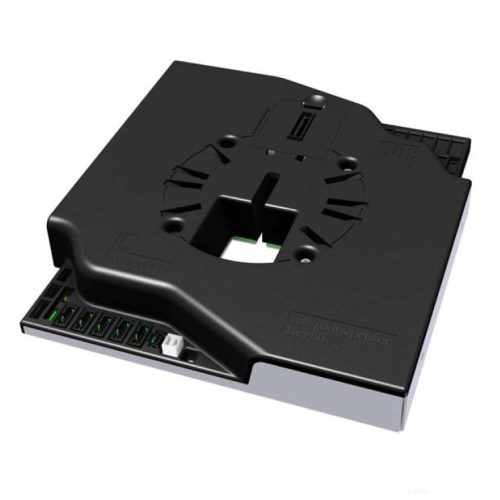
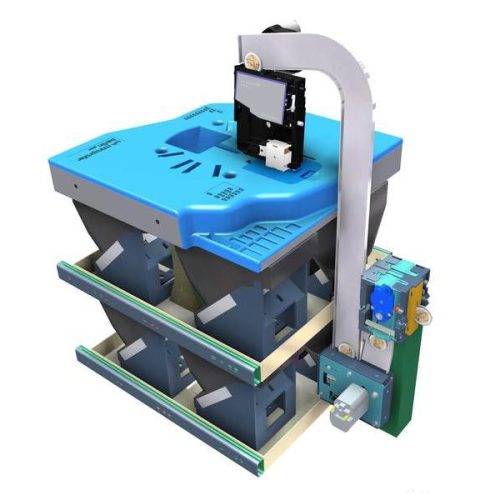
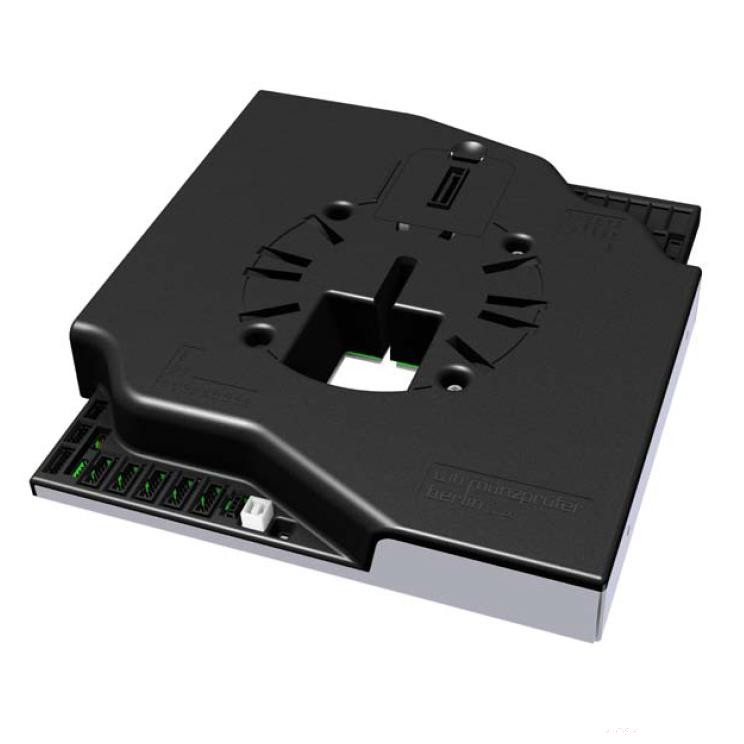
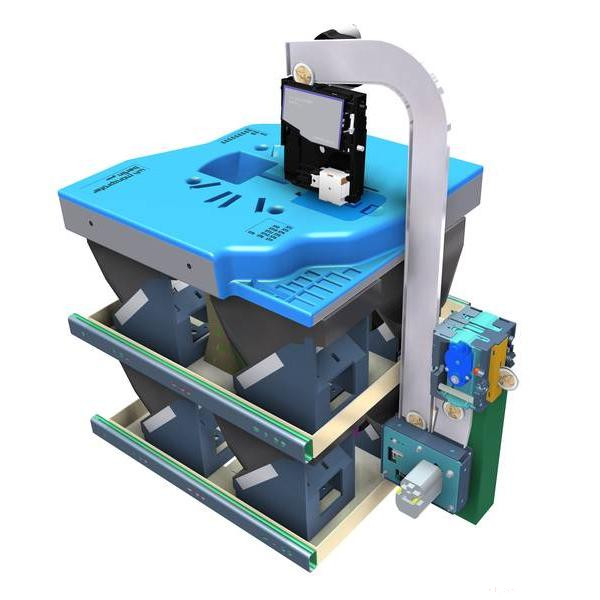
What are the technical specifications of the WH Berlin 10-way sorter / CCTALK HUB / coin system controller, USB, STD, 24V DC, CCTALK?
- Item number: TWS100C_24_V
- Function: 10-way coin sorter + escrow buffer + ccTalk interface HUB
- Max coin diameter: 32.5 mm
- Escrow capacity: up to 50 coins
- Storage speed: up to 2 coins/second
- Operating temperature: 10°C to +70°C (/P option), or -20°C to +70°C
- Overall dimensions: 320 × 300 × 45.5 mm
- Supply voltage: 12 V DC and 24 V DC
- Current draw: 300–600 mA
- ccTalk HUB: up to 10 ccTalk hoppers
- Supported peripherals (examples): anti pin system, coin feeder, coin accelerator, reject motor, coin validator
- Weight: 3.629 kg/unit
- Interface: ccTalk/USB
Why do 10-way sorting and escrow matter in cash automation?
If your solution needs multiple coin paths (for example multiple payout hoppers, separate cash boxes, interim buffers, or controlled return), a 10-way sorter gives you far more routing options than basic 3-way modules. The escrow buffer lets the system hold coins until the application confirms a valid transaction, then either accepts, reroutes or returns them. This helps reduce disputes, supports coin recirculation strategies and keeps the user flow predictable, even under peak load.
How does a ccTalk HUB with USB simplify integration?
A built-in ccTalk HUB allows you to connect and manage multiple ccTalk peripherals through a single, organised control point. That typically means clearer wiring, easier addressing, faster commissioning and more reliable diagnostics. The USB side provides a straightforward host connection for your software stack, which can shorten development time and make field troubleshooting easier—important factors when you operate unattended systems and want to minimise downtime.
Where is this module a good fit?
The WH Berlin 10-way sorter / CCTALK HUB / coin system controller, USB, STD, 24V DC, CCTALK targets complex coin-handling tasks where compact mechanics and robust communication are both required. It fits payment and ticketing machines, coin changers and any self-service environment where internal space is tight but you still need multiple output paths and coordinated peripheral control. The low-height construction supports designs where the coin in/out position and user controls must remain within regulated ergonomic ranges.
Selection criteria checklist
- Coin range and routing: do you need up to 10 output paths and support up to 32.5 mm coins?
- Throughput: is 2 coins/second and an escrow up to 50 coins sufficient for peak traffic?
- Connectivity: number of ccTalk peripherals (up to 10 hoppers) and your USB host requirements.
- Power budget: stable 12 V DC / 24 V DC supply with headroom beyond 300–600 mA.
- Mechanical constraints: 320 × 300 × 45.5 mm fit, mounting points and service access.
- Environment: temperature range and the level of dust/contamination expected on site.
Quality, local technical support and operating conditions
Industrial cash-handling reliability depends not only on the component itself but on consistent operating discipline. Keep the mechanics clean, follow recommended power and environmental limits, and document your commissioning tests. When you have access to local technical support and repair capability, you can resolve failures faster and—just as importantly—identify root causes such as unstable power, loose connectors, bus addressing issues or coin-path contamination.
- Preventive maintenance: cleaning the coin path, checking sensors, connectors and fasteners.
- Power stability: verify voltage under load and use proper cable sizing for 12 V DC / 24 V DC.
- Environmental control: avoid condensation and keep temperature/humidity within the supported range.
- Operational logging: store test results, address maps and service notes for faster diagnosis.
Supply, logistics and financing options
To reduce project risk, align procurement with your rollout plan and choose commercial terms that keep both availability and cash-flow under control.
- local and european stock, plus timed inbound deliveries for phased deployments
- selectable shipping methods, customs clearance and freight forwarding for sensitive electronics
- post-payment options and invoicing in foreign currency to support financial planning
- project-specific quotations, samples and pilot quantities when you validate the design
CTA: build an interest list you can reuse later
If the WH Berlin 10-way sorter / CCTALK HUB / coin system controller, USB, STD, 24V DC, CCTALK or related coin-handling parts might be useful beyond your current project, add them to your interest list (cart) now. At the end of your visit, send the list so we can align on technical requirements, delivery options and project terms, then come back with a focused quotation.
FAQ
What helps keep a ccTalk network stable in the field?
Use tidy wiring, reliable grounding and a stable 24 V DC supply, and keep addressing consistent across peripherals. In unattended installations, clean cable routing and documented address maps significantly reduce communication faults.
Why is escrow useful for coin acceptance?
Escrow allows the system to hold a coin until the transaction is confirmed, then accept, reroute or return it. This improves user experience and reduces error cases during validation and change-making logic.
What do industrial coin modules typically offer that entry-level devices often miss?
They typically provide more robust mechanics, stable protocols such as ccTalk, better diagnostics, parts designed for continuous duty, and scalable peripheral control—so you can run multiple hoppers and coin paths reliably.
Which maintenance routine supports long-term uptime?
Regular cleaning, inspection of wear items, verification of connectors and fasteners, and periodic load testing. Keeping temperature, dust and humidity within limits usually lowers jam rates and service calls.