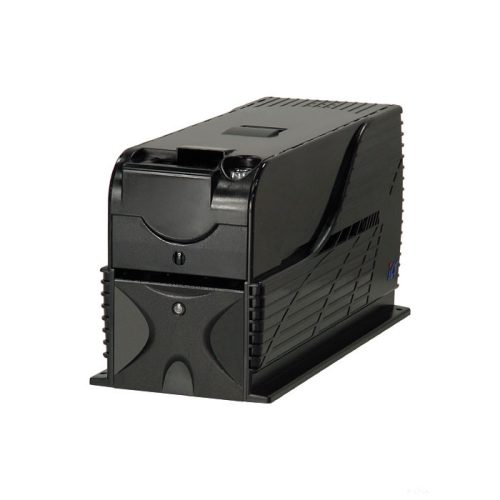
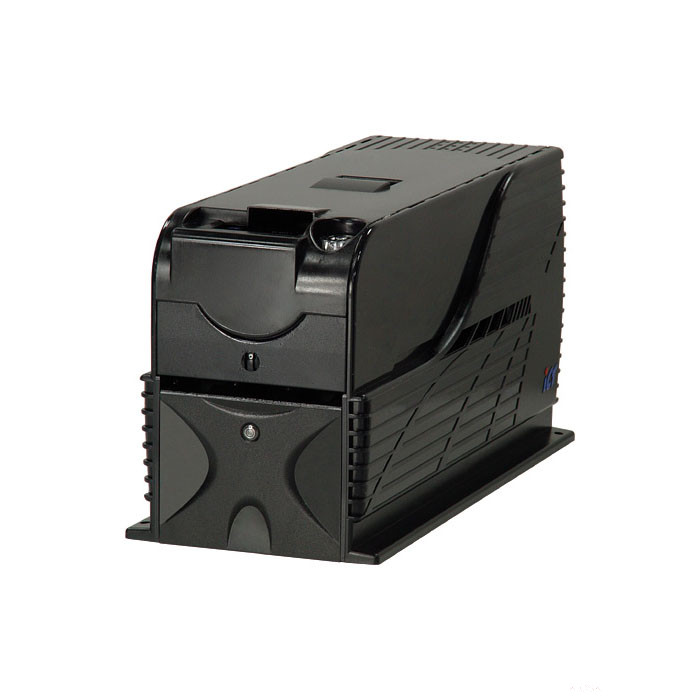
What are the technical specifications of the ICT ND300KM banknote dispenser?
- storage capacity: approx. 300 banknotes (depending on note condition)
- payout time: about 1 second per banknote
- power supply: 12 v dc
- current consumption: 0.3–2.5 a
- interfaces: pulse, hopper, rs232
- operating temperature: 10–50 °c
- dimensions: 268 × 119 × 143 mm
- weight: approx. 700 g / pcs
- use case: banknote payout, indoor environment
- access protection: lockable top cover
Where does fast, high-capacity banknote payout create the most value?
The ICT ND300KM banknote dispenser is a strong fit when you need predictable payouts with short transaction time and a buffered note capacity that reduces refill frequency. The roughly 300-note capacity can help you handle peak periods more smoothly, while the ~1 second payout cycle supports consistent throughput. The design does not depend on banknote size, which can simplify planning across currencies and denominations. A lockable top cover supports controlled access and clearer service workflows, which matters in cash-handling environments where accountability and auditability are required.
Typical deployment situations
- high-volume banknote payout during automated customer service
- unattended terminals selling higher value services where payout speed matters
- indoor change-making points and systems that require reliable cash payout
How do pulse, hopper and RS232 interfaces help system integration?
Integration is usually decided by your controller and your software stack. Pulse control can be simple to implement for basic payout signalling, while hopper-style control and RS232 are often used where structured communication, status reporting and diagnostics are important. A 12 V DC supply is common in industrial electronics, which keeps power planning straightforward. For installation planning, keep the stated operating range in mind (10–50 °C) and aim for stable indoor conditions and low dust load to support long-term reliability.
Selection criteria checklist: what should you verify before ordering?
- capacity: does a ~300-note buffer match your peak payout profile?
- speed: is ~1 second per banknote aligned with your target transaction time?
- interface: which control method matches your controller (pulse, hopper, rs232)?
- power budget: 12 v dc available, and can you allocate 0.3–2.5 a safely?
- environment: can you keep indoor conditions within 10–50 °c with low dust?
- access control: do you need a lock, permissions and a defined service workflow?
- operations: do you have a refill, cleaning and inspection routine you can follow?
Why do quality, local technical support and preventive maintenance matter?
In cash-handling projects, availability directly affects revenue and user experience. Reliability is not only about the mechanics of the dispenser, but also about disciplined operation. Banknote quality (wrinkled, dirty, damp notes) can increase stress on the note path, so cleaning and inspection routines are important. Local technical support and service shorten diagnostics and spare-part turnaround, helping you reduce downtime and keep rollout schedules on track.
- preventive maintenance: cleaning, note-path inspection and wear monitoring
- operating conditions: stable indoor climate, clean power and controlled dust load
- integration discipline: monitoring, logging and repeatable test procedures
Supply, logistics and financing options: how do you reduce project risk?
Lead times and commercial terms can be as critical as technical fit. If you roll out in phases, you want deliveries to match your build schedule while keeping cash-flow predictable. Planning the commercial side early helps you avoid last-minute compromises in installation quality or commissioning timelines.
- local stock and scheduled inbound deliveries for phased deployments
- selectable shipping methods, customs handling and freight forwarding for sensitive electronics
- post-payment options and multi-currency invoicing for clearer budgeting
- project-specific quotations, sample units and pilot quantities
CTA: build an interest list and send it at the end of your visit
If you’re comparing alternatives, add the items that may be relevant to you to your interest list (cart) even if not all of them are for the current scope. At the end of your visit, send the list in one go, and we can respond with quantities, delivery options and project terms based on your timeline.
- collect shortlisted modules and accessories in your interest list
- add a short note about environment, expected volume and target deadline
- send the list at the end of your visit and we’ll follow up with next steps
FAQ
Which interface should you choose: pulse, hopper or rs232?
Choose the option your controller and software handle reliably. pulse can be straightforward for basic signalling, while rs232 is commonly used where richer status feedback and diagnostics help monitoring and troubleshooting.
Why does banknote condition matter for stable payout?
Wrinkled, dirty or damp notes can increase the likelihood of jams or double feeds. industrial mechanisms support consistent handling, but cleaning and inspection routines remain key for long-term availability.
What extra capabilities do industrial cash modules typically provide?
You typically get higher buffer capacity, faster payout cycles, access protection (such as a lockable cover), better serviceability and more actionable status signalling. these features are especially valuable under sustained load and tight uptime targets.
What should you keep stable in an indoor installation environment?
Keep temperature within the specified range, ensure stable 12 v dc power, and reduce dust exposure. clean conditions and preventive maintenance measurably improve uptime.