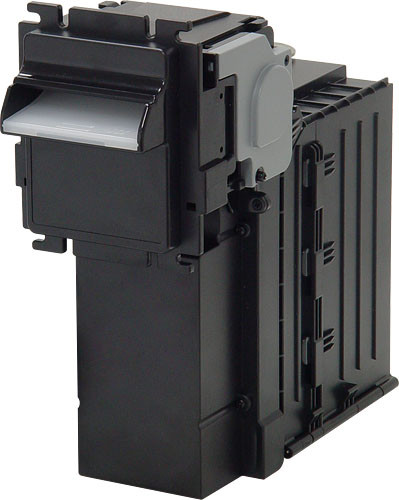
What are the technical characteristics of the ICT L70 stacker (ICTL70STAC) bill validator?
- acceptance rate: 96% or greater
- insertion: four-way banknote insertion
- transaction speed: approx. 1.5–3 seconds to stack
- stacker capacity: ~200 notes (p2) or ~500 notes (p5)
- interfaces: pulse, rs232, id003, mdb, ccnet (variant dependent)
- power: nominal 12 v (10.8–13.2 v dc range)
- operating temperature: 0–55 °c (variant dependent)
- humidity: 30–85% rh, non-condensing
Where does a stacker bill validator improve cash payment flow?
A stacker validator is a strong fit when you want not only fast validation but also orderly, cassette-style collection. This supports predictable collection routines and cleaner on-site handling. The ICT L70 stacker (ICTL70STAC) bill validator reduces user friction through four-way insertion, while its short cycle time helps keep queues down during busy periods.
What does a 1.5–3 second stacking cycle change in daily operation?
Short cycle time keeps payments responsive: less waiting, fewer re-insert attempts, and fewer abandoned transactions when traffic spikes. To keep performance consistent, plan stable mounting, tidy wiring, and access for cleaning—contamination and poor alignment are common drivers of rising rejection and slower cycles.
How should you choose between ID003, MDB, RS232, and pulse?
Controller fit
If you want richer state visibility and structured event handling, ID003 or mdb is typically the better path. Pulse can be practical for simpler signaling when you are integrating into an existing controller. RS232 is convenient when your platform already relies on serial communication and you want clear diagnostic data.
Service and troubleshooting
On the controller side, log key events and define a quick field test procedure for insertion, acceptance, and stacking. This shortens on-site troubleshooting and supports more consistent service outcomes.
Selection criteria checklist for procurement
- expected daily and peak transaction volume, and how critical short cycle time is
- stacker capacity decision: p2 (~200) or p5 (~500) aligned to collection routines
- interface choice: id003, mdb, rs232, pulse, or ccnet
- operating conditions: dust, temperature, humidity, and access for cleaning
- service strategy: how quickly a spare unit can be swapped at critical sites
- logging requirements for faster diagnostics and clearer reconciliation
How do quality, local technical support, and routine maintenance protect revenue?
A bill validator directly affects payment completion. When rejection rises, user satisfaction drops and interrupted transactions increase. Regular cleaning, checking the note path and sensors, and maintaining stable wiring helps preserve acceptance rates. Local technical support and a clear service route reduce outage time, while a spare-unit approach protects availability.
- preventive cleaning and scheduled inspections
- connector, harness, and mounting checks to avoid intermittent faults
- faster diagnostics using logged events
Which supply and financing options support projects?
- warehouse stock for rapid deployment and critical replacements
- scheduled inbound deliveries aligned to installation phases
- selectable shipping modes to balance lead time and cost
- customs clearance and forwarding for cross-border purchasing
- post-payment options for predictable cash flow
- foreign-currency invoicing aligned to project administration
- project-tailored quotations based on volume and schedule
CTA – save what you may reuse later
Add the ict l70 stacker (ictl70stac) bill validator and the accessories you might reuse in future builds to your interest list (cart) even if you are still comparing options. Send the list at the end of your visit and we’ll reply with compatibility notes, expected delivery, and purchasing options aligned with your deployment plan.
FAQ – common questions about stacker bill validators
Why does choosing stacker capacity (200 vs. 500 notes) matter?
Higher capacity reduces collection frequency, while lower capacity can support a more compact mechanical layout. the right choice depends on access and collection routines.
How does four-way insertion help in real traffic?
It reduces user errors, speeds up deposits, and can cut down on repeated insert attempts during peak periods.
Which interface is practical when you want richer state control?
ID003 or mdb typically provides richer state and event visibility, supporting faster diagnostics and cleaner transaction handling.
What industrial capabilities are often missing from basic cash devices?
Service-friendly access, fast update paths, sturdier mechanics, and sensing approaches designed for predictable performance in continuous use.