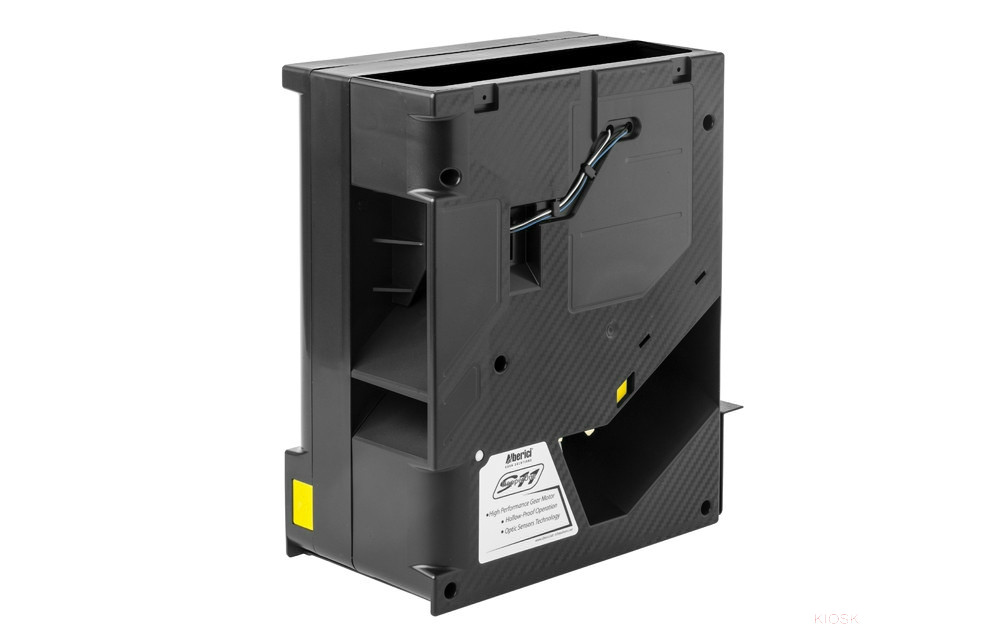
Hopper Alberici Hopperone 24V CCTALK STD
Hopper Alberici Hopperone 24V CCTALK STD
Item number:
HOPPERS11
Hopper Alberici Hopperone 24V CCTALK STD
Item number:
HOPPERS11
HOPPERS11 coin payout unit for fast change dispensing
HOPPERS11 is an industrial coin dispenser unit with a standard connection and ccTalk interface for controlled coin payout in cash-handling systems. The belt-driven design supports multiple coin/token ranges: with a standard belt it handles 21–30.5 mm diameter and 1.6–3.3 mm thickness; with a small belt it covers 16.25–21.55 mm diameter and 1.0–3.3 mm thickness. It is available in 12 V DC and 24 V DC versions and can be integrated via parallel, USB or ccTalk, which makes it a practical choice for new builds and replacement projects. If you need reliable, repeatable coin dispensing, HOPPERS11 hopper alberici hopperone 24 V DC ccTalk std is a strong option.
HOPPERS11 is an industrial coin dispenser unit with a standard connection and ccTalk interface for controlled coin payout in cash-handling systems. The belt-driven design supports multiple coin/token ranges: with a standard belt it handles 21–30.5 mm diameter and 1.6–3.3 mm thickness; with a small belt it covers 16.25–21.55 mm diameter and 1.0–3.3 mm thickness. It is available in 12 V DC and 24 V DC versions and can be integrated via parallel, USB or ccTalk, which makes it a practical choice for new builds and replacement projects. If you need reliable, repeatable coin dispensing, HOPPERS11 hopper alberici hopperone 24 V DC ccTalk std is a strong option.
THE PRICES OF THE PRODUCTS ON THIS WEBSITE ARE INDICATIVE PRICES FOR 1 ITEM. AFTER ASSESSING YOUR EXACT REQUIREMENTS, WE WILL SEND YOU A QUOTATION TAILORED TO YOUR PROJECT, INCLUDING ANY ADDITIONAL COSTS AND DISCOUNTS THAT MAY BE APPLICABLE. .
Our colleagues will contact you in any case. THE PICTURES OF THE PRODUCTS ON THIS WEBSITE ARE ILLUSTRATIONS, THEY MAY DIFFER FROM THE REAL APPEARANCE OF THE PRODUCT!
In stock
Accessories