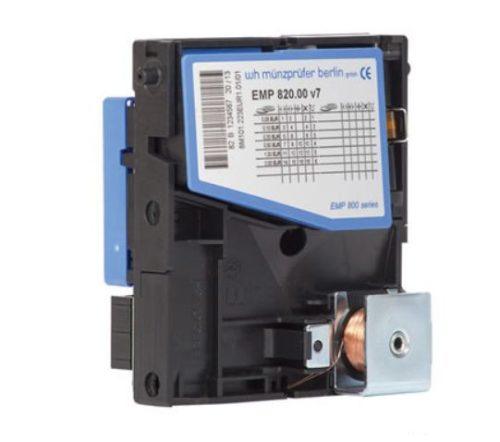
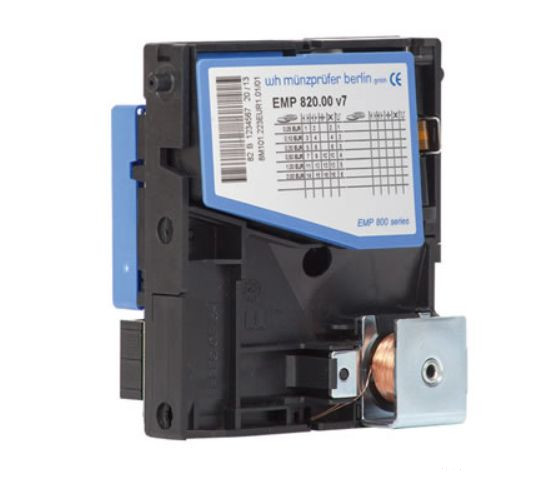
What are the technical specs of the EMP860 v7 /E 32-channel coin validator cctalk front reject?
- item number: EMP860v7_E
- acceptance rate: 98%
- supported denominations: 32
- max coin size: 32.5 × 3 mm
- operating temperature: 10 °C to +70 °C (/P option), -20 °C to +70 °C
- dimensions: 104 × 53 × 93.5 mm
- supply voltage: 10–26 V DC
- current draw: 30–300 mA
- weight: 300 g/pcs
- options: /E outdoor, /P indoor
- interfaces: USB (optional), ccTalk, MDB, pulse, parallel
Where does the EMP860 v7 /E 32-channel coin validator ccTalk front reject fit best?
Use it when unattended payment must stay fast and consistent: parking solutions, car wash payment points, ticketing machines and access systems. Stable coin recognition reduces abandoned transactions and support calls, while the front reject design helps keep user actions clear at the panel. With 32-channel handling, you can cover multiple coins or tokens under one configuration and keep the payment flow predictable during peak hours.
What do ccTalk and multi-interface options change for integration?
Projects often mix controller generations and bus expectations. ccTalk, MDB, pulse and parallel connectivity reduce friction when you need to match a specific control platform. This also helps future changes: you can keep the mechanical installation and switch the interface approach as the system evolves. optional usb support can speed up configuration and service routines during rollout and maintenance.
Which environmental and electrical parameters should you validate early?
The /E option targets wider temperature exposure, supporting operation down to -20 °C and up to +70 °C, which matters in outdoor cabinets and semi-exposed locations. The 10–26 V DC supply range matches common industrial power supplies, and the 30–300 mA current draw helps you size your power budget realistically. Plan mounting and routing around the 104 × 53 × 93.5 mm envelope and the 300 g/pcs mass, and keep access paths clear for cleaning and quick replacement.
Selection criteria checklist
Mechanical integration
- confirm the envelope (104 × 53 × 93.5 mm) and mounting points so the module sits stress-free in the door
- align coin entry and coin path to avoid friction up to the max size (32.5 × 3 mm)
- reserve front access for cleaning and fast swap procedures
Power and communications
- provide stable 10–26 V DC supply and budget for 30–300 mA across worst-case situations
- select the interface that matches your controller: ccTalk, MDB, pulse or parallel; USB can support configuration
- test controller timing and fault behavior so transaction logic remains consistent
Operating conditions and uptime
- choose /E outdoor or /P indoor based on real temperature exposure and cabinet airflow
- define a routine for cleaning and quick visual checks of the coin path
- keep spare units or critical wear parts available for faster recovery
How do quality, local support and maintenance protect availability?
In high-traffic deployments, downtime quickly turns into lost revenue and unhappy users. Planned cleaning and checks reduce dirt-related issues, while local technical support speeds up cut-out validation, configuration and troubleshooting. You get the best results when operating conditions are documented and followed, and when service access is designed into the cabinet from day one.
- routine cleaning and visual inspection of the coin path and sensing areas
- operating conditions: temperature, humidity, stable power and vibration control
- configuration management aligned to rollout and service procedures
Procurement and financing options that help projects move
- stock availability to match rollout schedules and minimize delays
- timed inbound deliveries aligned to production waves
- flexible shipping methods for urgent swaps and standard replenishment
- customs handling and forwarding support for sensitive electronics
- post-payment and invoicing in foreign currency for predictable cash-flow
- project-tailored quotations based on quantities and integration scope
CTA: build an interest list and send it at the end of your visit
If you find other coin entry bezels, escrow modules, sorting units, displays or printers that could be useful beyond your current rollout, add them to your interest list (cart). At the end of your visit, send the list and you’ll receive feedback on compatibility, stock status, delivery options and a project-aligned quote.
FAQ
What does 32-channel recognition mean in practice?
It indicates how many separate coins or tokens you can define in the configuration, allowing one validator to cover multiple payment cases within the same installation.
Why does acceptance rate matter for user experience?
More consistent recognition reduces rejected valid coins and interrupted transactions, which shortens queues and lowers the need for operator intervention.
Which industrial capabilities are often missing from basic solutions?
Common gaps include wide temperature tolerance, multiple interface options and documented configuration routines that support repeatable rollouts in continuous-duty locations.
What checks improve serviceability?
Define access points early, document cable routing and set a cleaning cadence, so swaps and recovery take less time when the site is under load.