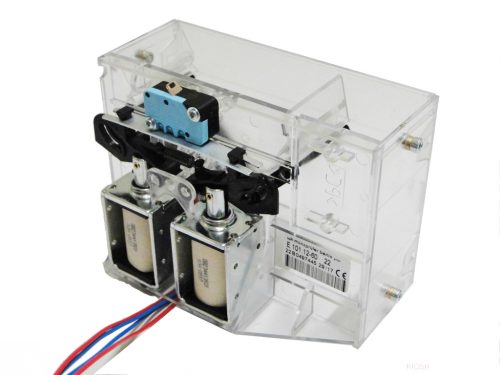
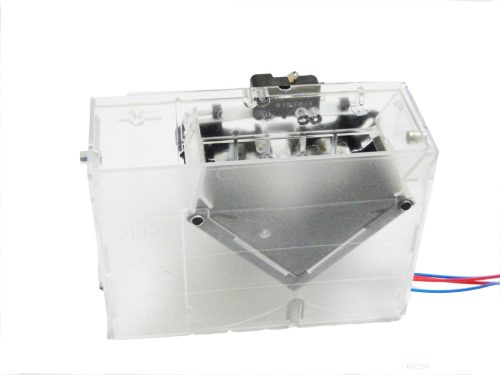
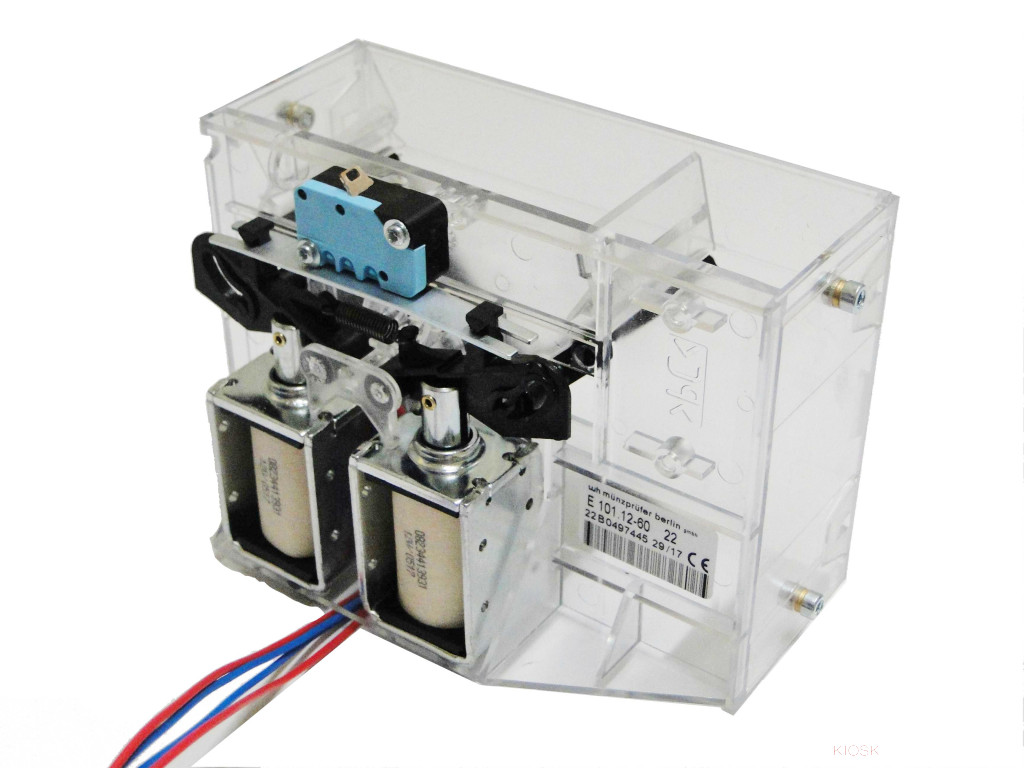
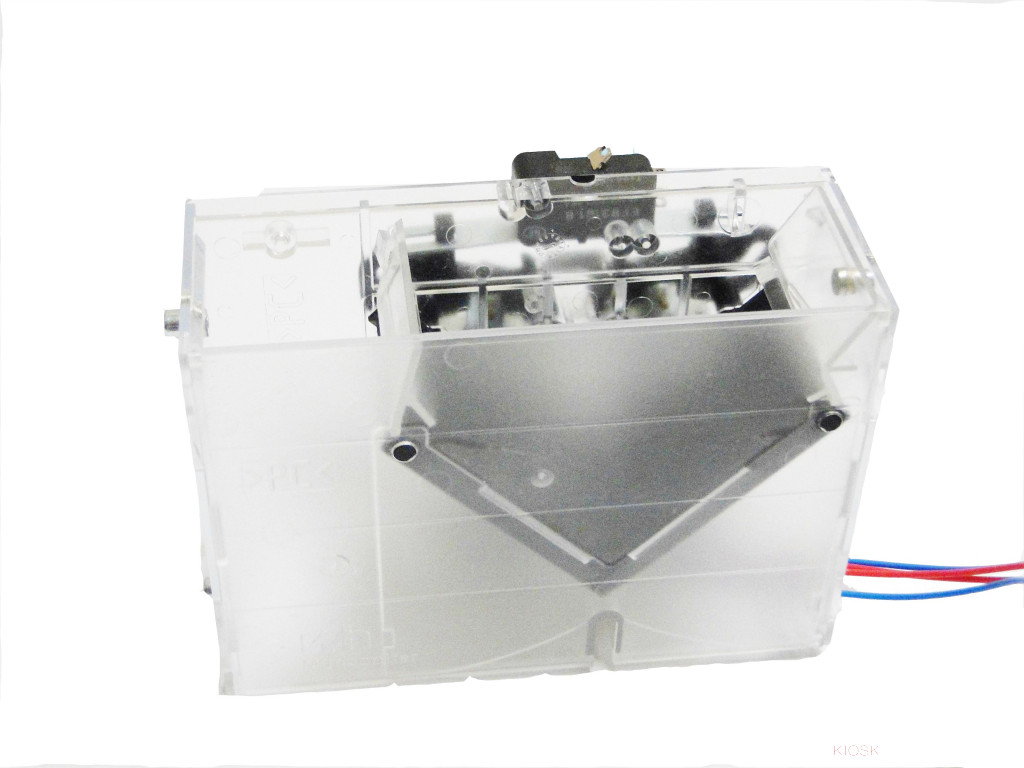
What are the E 101 12V solenoid operated escrow (E101) technical specifications?
- product: E 101 12V solenoid operated escrow
- item number: E101
- function: escrow (transitional magazine) holding accepted/identified coins until confirmation; returns coins on interruption
- capacity: 20–50 coins depending on coin size
- dimensions: 89 × 126 × 64 mm
- power input: 12 or 24 V DC
- current draw: 100–800 mA depending on type
- operating temperature: -20 °C to +70 °C
- actuation: solenoid (electromagnetic coils open the latches)
- interface: E101 power supply
- weight: 500 g/pcs
How does an escrow unit work at the transaction decision point?
An escrow unit keeps accepted coins in a controlled temporary magazine instead of dropping them directly into final storage. This creates a clear decision point: after confirmation the magazine releases coins to the cashbox path, while cancellation or interruption triggers a return through the payout slot. In practice, this supports traceable cash handling and a consistent customer experience, because the system can reliably “commit” or “return” coin deposits based on the payment outcome.
Why choose solenoid actuation for industrial load?
Solenoid actuation provides fast, repeatable latch movement that is straightforward to integrate into a controller sequence. This matters when many short transactions run back-to-back and you need consistent “accept vs. return” behaviour every time. The wide operating range (-20 °C to +70 °C) helps keep performance stable across varying site conditions, reducing unplanned service visits and improving overall availability.
Selection criteria: what should you check before ordering?
- coin load: peak coin volume and how often transactions are cancelled or interrupted
- capacity target: whether 20–50 coins covers typical baskets for your use case
- mechanical space: 89 × 126 × 64 mm envelope, mounting rigidity and service access
- power planning: 12/24 V DC availability, wiring and stable supply design
- control sequence: confirm/interrupt states, timing windows and fault handling
- environment: temperature exposure, dust, vibration and installation fit
How do you keep uptime high: quality, local support and preventive maintenance
Reliable cash handling is achieved through both component quality and disciplined operation. For an escrow unit, a clean coin path, stable mounting and a solid power supply directly influence consistent latch behaviour. Design your installation for quick access, so preventive checks can be completed without lengthy downtime. Local technical support and a structured service workflow are especially valuable when a payment point outage impacts revenue.
- scheduled cleaning and visual inspection around the coin path and latch area
- operating discipline: stable power plus controlled dust and vibration
- local service support: diagnostics, stress testing and fast replacement workflow
- commissioning tests: accept, confirm, interrupt and coin return scenarios
Supply, logistics and financial options for your project
In multi-unit deployments, procurement timing and commercial flexibility are part of risk control. Align deliveries to rollout phases and keep room for cash-flow planning so installations stay predictable.
- local stock and scheduled inbound deliveries aligned to deployment phases
- selectable shipping modes plus customs handling and forwarding
- post-payment, multi-currency invoicing and project-specific quotations
Add relevant components to your interest list
If you are comparing multiple cash-handling components, add the items that could also fit future iterations. Collect your selections into an interest list (cart) and send it at the end of your visit—this speeds up technical alignment, shipping choices and project-specific commercial terms.
FAQ
What is an escrow magazine used for in coin deposits?
It holds identified coins temporarily so they are committed only after confirmation. if the transaction is interrupted, coins can be returned through the payout slot, creating a clear outcome.
What do industrial cash modules typically provide beyond entry-level devices?
You generally get mechanics designed for continuous load, consistent control logic and a wider operating range. diagnostic options and faster service workflows are also common.
What helps make coin return predictable during interruptions?
A clearly defined coin path with a decision point where coins either release to the cashbox path or return to the payout slot. stable power and a clean coin path reduce the risk of sticking.
What should you prepare to speed up commissioning?
Design a stable 12/24 V DC power, mounting and service access for cleaning. run test cases for confirm and interrupt states so coin return is verified under realistic timing.