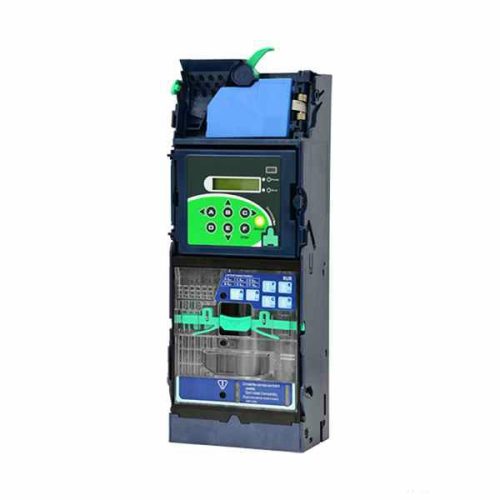
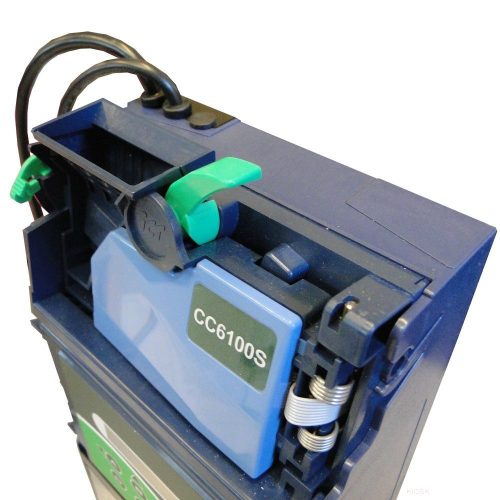
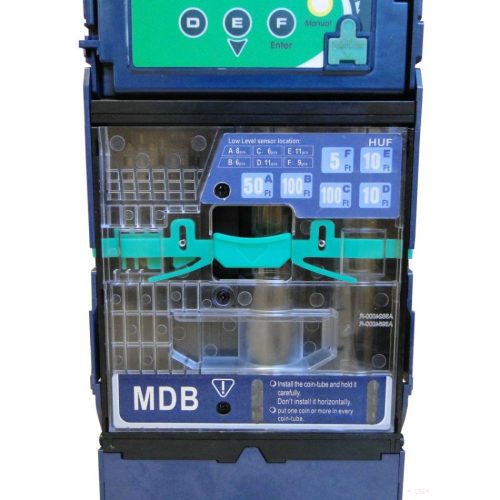
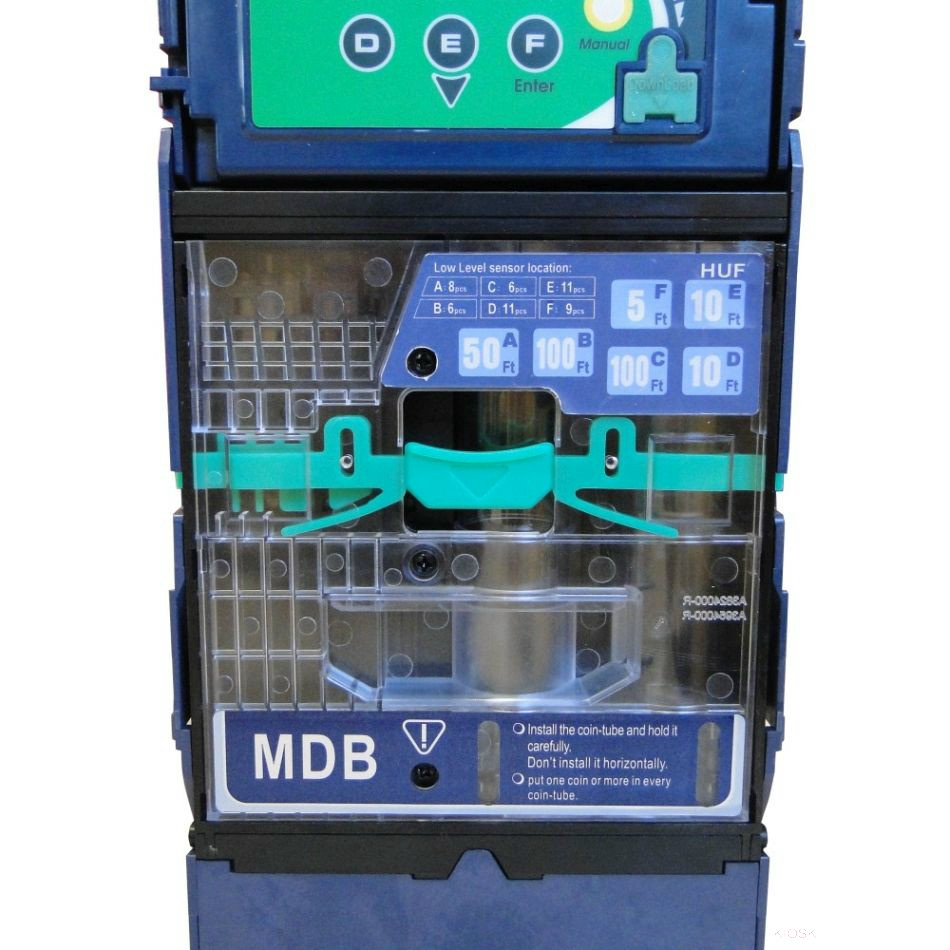
What are the ict cc6100m technical specifications?
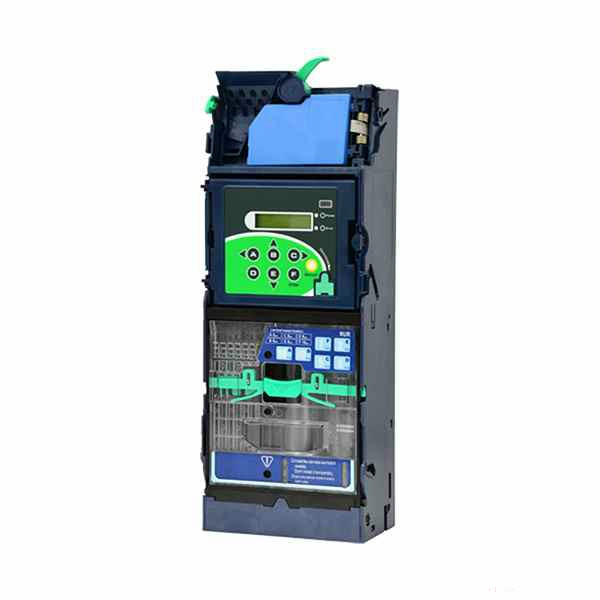
- item number: cc6100m1l000rro2af00
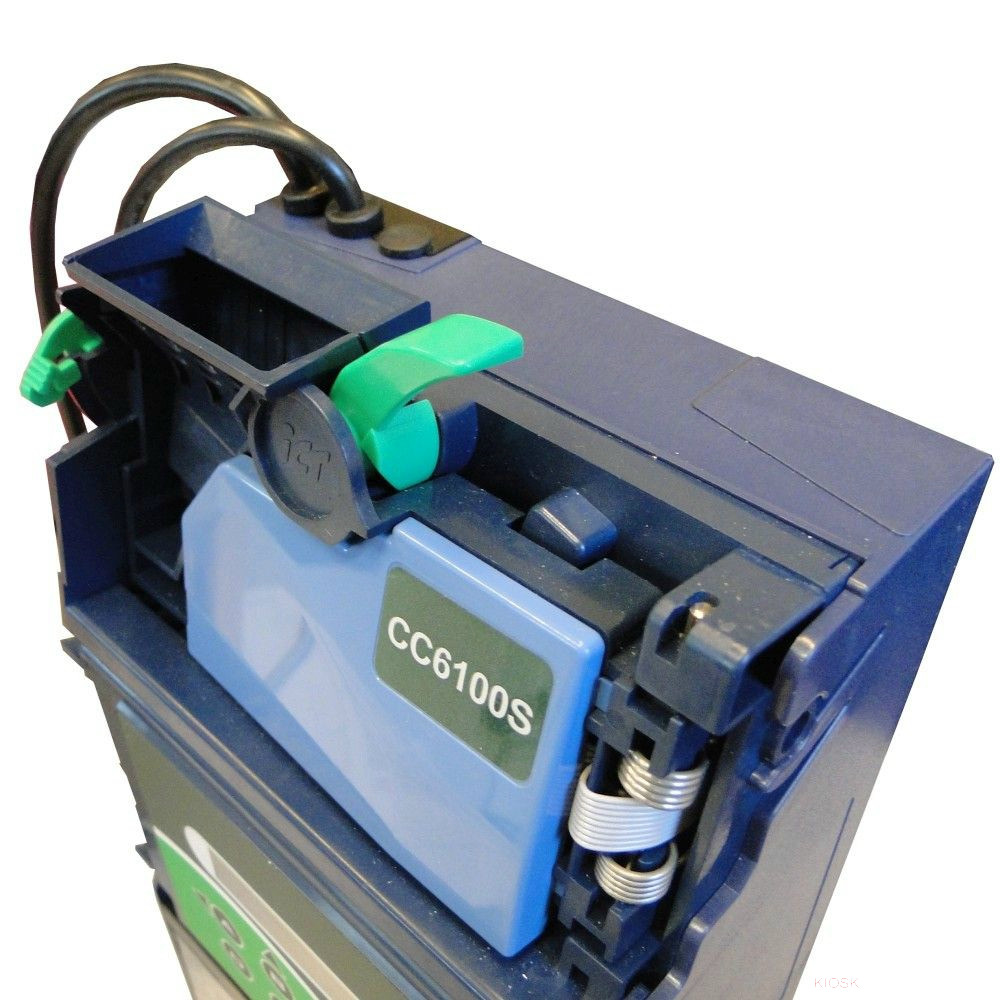
- type: coin acceptor with change payout, 6‑tube cassette (rol 4×50 and 2×10)
- acceptance rate: ~96%
- supported denominations: up to 15
- coin size range: 16–28 mm
- power input: 12 V DC or 24 V DC
- current draw: 0.5–4 A
- operating temperature: -15 °c to 55 °C (additional note: indoor 10–40 °C recommended)
- dimensions: 370 × 138 × 81 mm
- interfaces: MDB (and JPSTD); currencies listed: huf, eur, rol
- weight: ~2.5 kg/unit
- operation: LCD menu, with on‑site calibration capability
- serviceability: replaceable cassette, head unit and power board
Why choose a 6‑tube coin acceptor/change giver?
When your payment flow needs both coin acceptance and accurate change payout, a multi‑tube design lets you control coin float and payout logic instead of relying on ad‑hoc refills. More tubes generally mean higher capacity for frequent denominations, fewer refill visits, and fewer “no change available” interruptions during peak traffic. The ICT CC6100M is commonly selected for vending and automated retail, as well as parking and access-related payment points where transaction time and uptime directly impact revenue.
How does MDB/EXE compatibility simplify integration?
MDB/EXE is widely used in industrial payment controllers, so integration tends to be predictable: wiring and protocol expectations are clear, commissioning is faster, and later replacements are easier to standardize. The LCD menu and on‑site calibration support practical setup and diagnostics during installation, not only in a lab environment.
What operating conditions help keep coin handling stable?
Reliable coin acceptance depends on consistent power and a controlled environment. Plan the mechanical installation for easy access to the cassette and coin path, so routine checks and cleaning are quick. Keep dust and residue under control and follow recommended temperature limits; this helps maintain acceptance stability and payout accuracy over time.
Selection criteria: what should you verify before ordering?
- transaction load: peak coin volume and required payout speed
- coin float strategy: which denominations need higher tube capacity
- controller interface: mdb/exe (and jpstd if needed) match to your platform
- service workflow: access to cassette/head unit, swap time, spare strategy
- environment: indoor temperature, dust exposure, vibration, power stability
- coin set coverage: 16–28 mm range and the planned number of denominations
How do you reduce downtime risk and plan procurement?
Industrial cash-handling reliability is not only about the hardware itself, but also about maintenance discipline, documented procedures and a responsive support chain. Local technical support and practical parts logistics are especially valuable when a payment point outage translates to lost revenue.
- preventive maintenance: scheduled cleaning and visual checks around the coin path and tubes
- operating discipline: keep power and environmental conditions within recommendation to lower fault rates
- service readiness: involve local diagnostics and establish a fast swap process for critical modules
- inventory planning: local stock and scheduled inbound deliveries aligned to rollout phases
- shipping and customs: selectable shipping modes plus customs handling and forwarding for sensitive electronics
- financial options: post‑payment, multi‑currency invoicing and project‑specific quotations to keep cash flow predictable
Add relevant components to your interest list
If you are comparing multiple solutions, it’s practical to add not only the items for today’s build but also components that could fit future iterations. Collect your selections into an interest list and send it at the end of your visit—this helps speed up the technical alignment, shipping choices and project‑specific commercial terms.
FAQ
What does an industrial coin acceptor/change giver provide beyond entry-level devices?
Typically you get more consistent acceptance, broader denomination handling and mechanics designed for continuous load. modular construction and replaceable cassettes can also reduce service time.
Why do more tubes matter for day-to-day service?
More tubes usually means higher coin capacity for frequent denominations, fewer refill cycles, and fewer “no change” events during peak usage.
What should you prepare to speed up commissioning?
Confirm the controller interface (e.g., mdb), plan mechanical access to the cassette, and ensure stable power. run test scenarios with typical coins and payout cases before live deployment.
How can you maximize availability over the long run?
Use a routine for cleaning and inspection, keep operating conditions stable, and design a quick swap workflow for critical modules. this lowers unexpected stoppages and keeps transaction performance predictable.