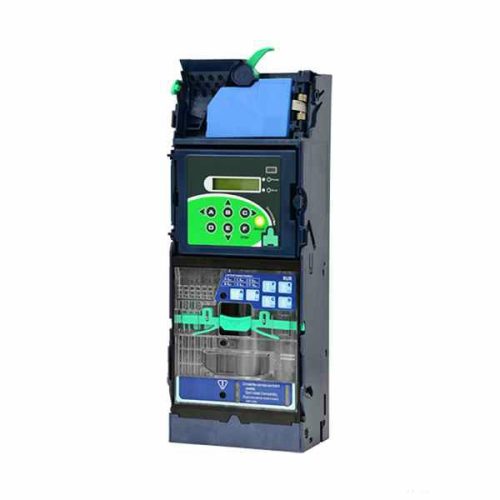
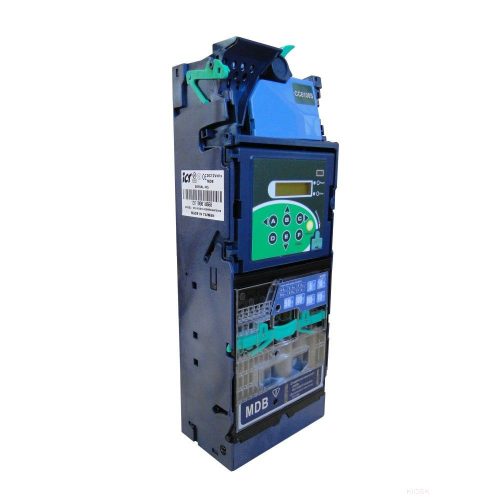
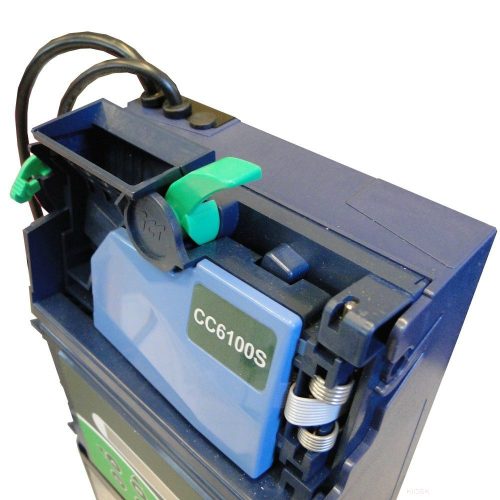
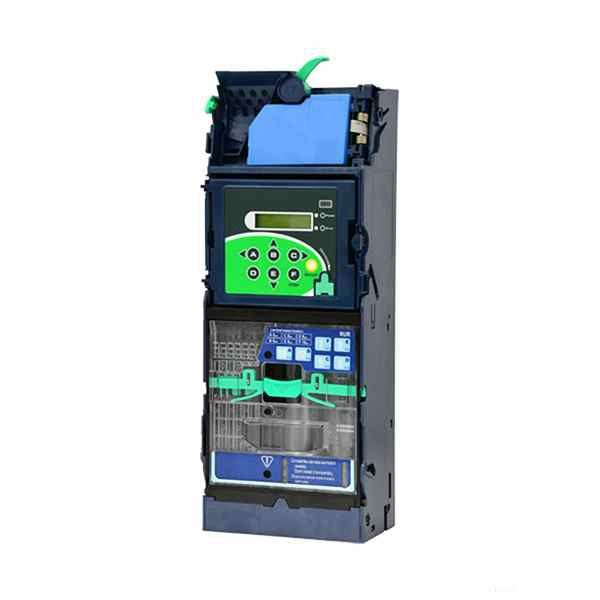
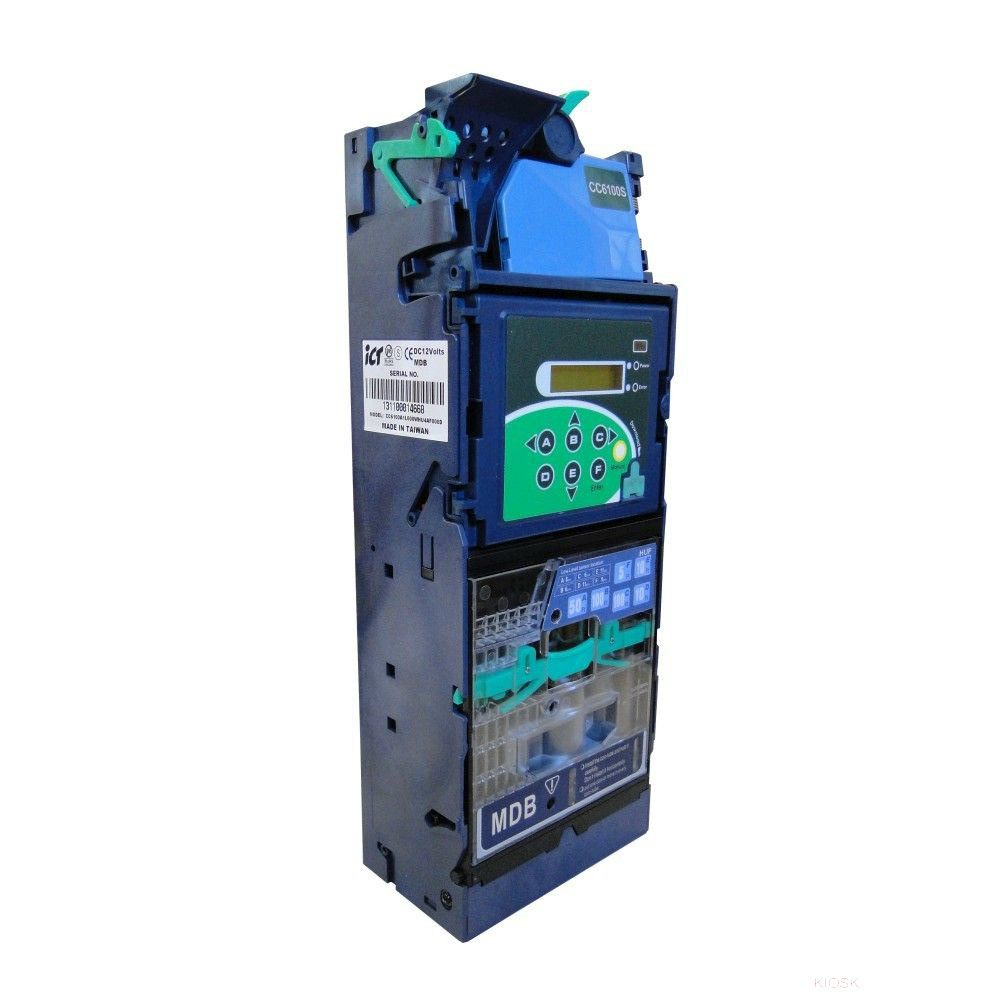
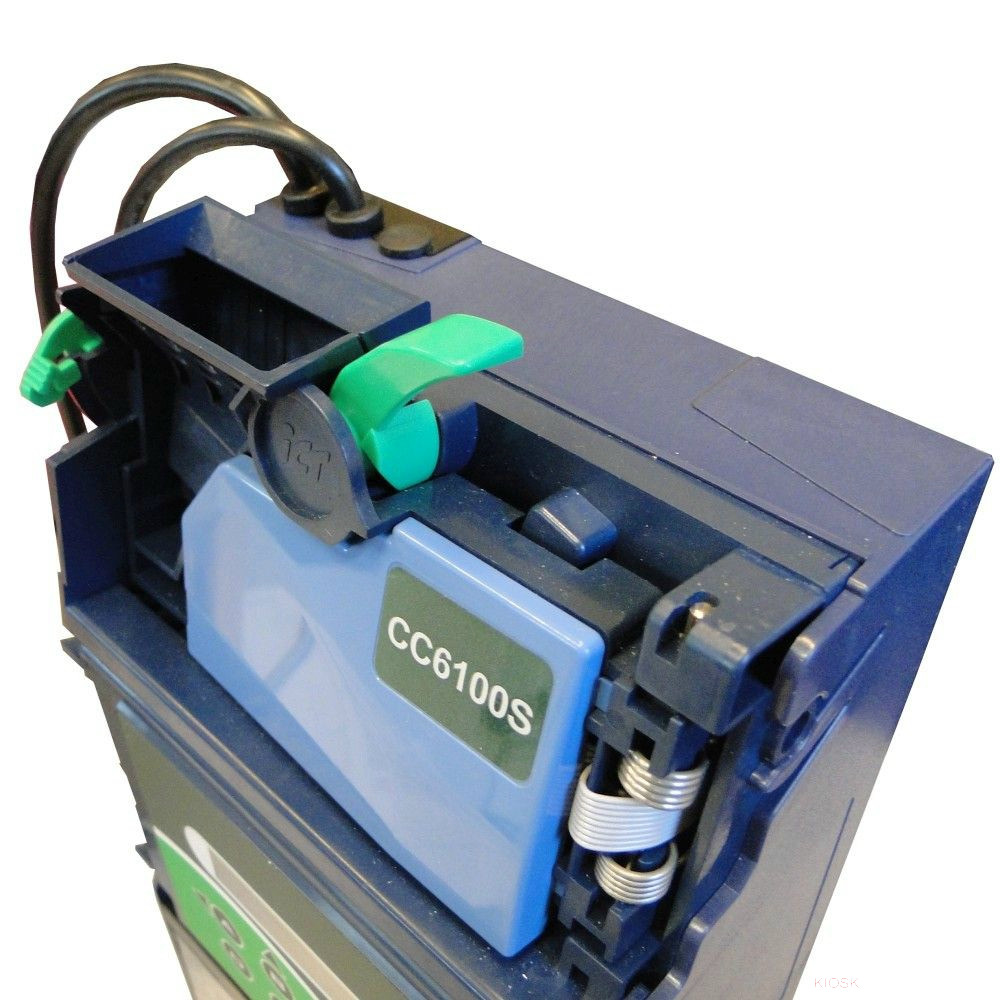
What are the technical specifications of the ICT CC6100E coin changer (6-tube change giver)?
- design: 6 modular tubes for high coin capacity and flexible payout combinations
- acceptance rate: approx. 0.96 (manufacturer data)
- denominations: up to 15 configurable denominations
- coin diameter: 16–28 mm
- interfaces: mdb / executive (exe) / jpstd
- power: 12 V DC or 24 V DC (variant-dependent)
- current draw: approx. 0.5–4 A depending on operation
- dimensions: approx. 370 × 138 × 81 mm
- weight: approx. 2.5 kg per unit
- operating temperature: about -15 °C to +55 °C depending on configuration
- security & service: anti-fishing mechanism, lcm status display, on-site calibration; optional irda/usb programmer
What does a 6-tube coin changer solve in the payment flow?
The ICT CC6100E coin changer (6-tube change giver) is built to make coin acceptance and change payout fast, repeatable and operationally manageable. Six tubes provide high coin storage capacity, helping you ride through peak periods and reduce refill visits. With multiple interfaces (MDB / EXE / JPSTD), the unit fits different controller platforms, while the lcm status display supports quick checks and faster troubleshooting during operation.
Where does it perform especially well?
- self-service payment points where change payout speed impacts throughput
- mixed coin circulation environments (16–28 mm) with multiple denominations
- sites where physical protection and serviceability are important operational requirements
How do modular tubes improve cash logistics?
Modular tubes make refilling and verification more structured: minimum fill levels and tube logic support predictable maintenance routines. High tube capacity can reduce interventions, and flexible payout combinations help you align the setup to real-world traffic patterns. On-site acceptance calibration adds fine-tuning when coin mix or usage conditions change.
Selection criteria checklist: what should you verify before ordering?
- coin diameter: does 16–28 mm cover the coins you expect
- denominations: do you need up to 15 denominations and how will you map them to tubes
- interface: mdb, exe or jpstd compatibility with your controller
- power budget: 12 v or 24 v dc, and can you plan for 0.5–4 a draw
- physical protection: is an anti-fishing mechanism required on site
- integration space: do 370 × 138 × 81 mm and ~2.5 kg fit your mechanical design
- environment: does the planned temperature range match about -15 °c to +55 °c
Why do quality, local support and preventive maintenance matter?
Coin paths are sensitive to dust and wear. To keep availability high, define cleaning routines, use a checklist-based approach, and validate with logged test payouts. Access to local technical support can speed up diagnostics and configuration work, reducing downtime and improving rollout predictability.
- preventive routine: cleaning, sensor checks, test payouts
- operating conditions: reduced dust load and stable power
- operational control: event logs, alerts, verification after service
Supply, logistics and commercial options: how do you plan more predictably?
For phased deployments, procurement and payment terms can materially affect project risk. Align inbound deliveries with installation milestones while keeping costs and cash-flow transparent.
- local stock and scheduled inbound deliveries for staged rollouts
- selectable shipping methods, customs handling and freight forwarding
- post-payment options and multi-currency invoicing
- project-specific quotations, pilot quantities and volume optimisation
CTA: build an interest list and send it at the end of your visit
If you are comparing options, add the components that may be relevant later to your interest list (cart), even if they are not all required today. At the end of your visit, send the list so we can respond quickly with compatibility notes, delivery paths and project terms.
- collect shortlisted modules and accessories in your cart
- add a short note on interface needs (mdb / exe / jpstd) and expected quantities
- send the list at the end of your visit for a focused follow-up
FAQ
What coin sizes can the ict cc6100e coin changer (6-tube change giver) handle?
Manufacturer data indicates 16–28 mm coin diameter support, depending on configuration.
Which control interfaces are supported?
Supported interfaces include mdb, executive (exe) and jpstd; some variants offer irda/usb programming.
Why is an anti-fishing mechanism useful?
It reduces the risk of coins being pulled back or manipulated out of the coin path, improving physical security.
What do you typically get versus entry-level devices?
Better serviceability, higher storage capacity, more sensing along the coin path and integration-friendly interfaces, supporting stable performance under sustained load.