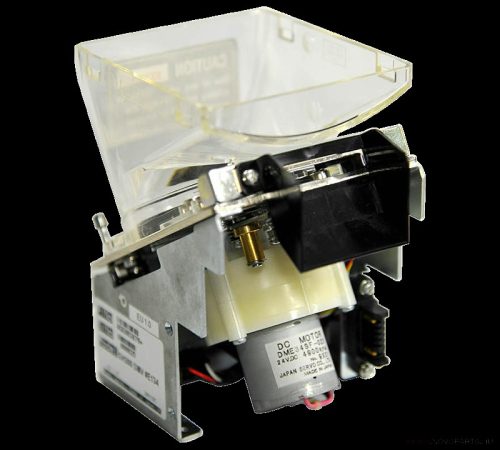
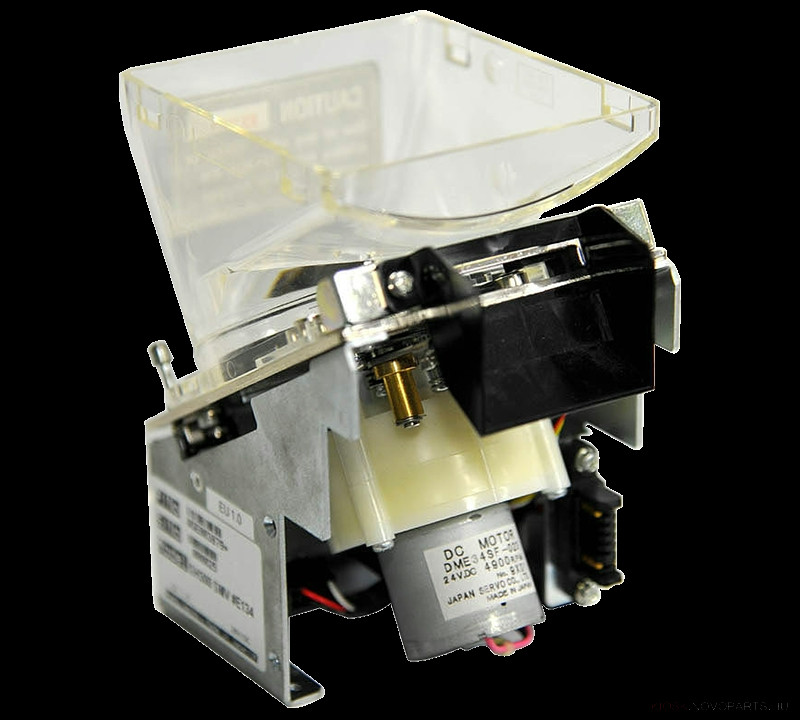
What are the technical specifications of the Asahi Seiko SH300 coin hopper (30301401) – 1 EUR / 100 Ft, ccTalk?
- interface: ccTalk
- coin diameter range: 17.5–26.7 mm
- coin thickness: 1.3–3.1 mm
- dispensing speed: 400–600 coins/min (varies with loading and coin)
- example capacity: 20.0 mm – 260 coins; 22.5 mm – 170 coins; 26.5 mm – 190 coins
- installation temperature: -10°C to +50°C
- humidity: 15–85% RH (avoid condensation)
- mounting: indoors within a cabinet, within 2° of upright
- weight: approx. 1 kg empty; listed weight: 1.394 kg/pcs
What does a heavy-duty coin hopper help you achieve?
The Asahi Seiko SH300 coin hopper (30301401) – 1 EUR / 100 Ft, ccTalk fits projects where throughput and repeatability are non-negotiable. With a 400–600 coins/min dispensing rate, it supports short transaction times and consistent payout even under peak demand. A motor brake with automatic reversal under jam conditions supports continuous service, while the fitted proximity sensor provides reliable coin counting feedback to your controller logic. For multi-device cash modules, an interface like ccTalk can simplify status reporting and structured fault handling across the system.
How do you integrate it via ccTalk?
ccTalk is a serial communication approach used widely for cash-handling peripherals. In practice, your host control unit sends dispense commands and reads back state information and counters, which can improve traceability (for example: payout confirmation, counting data and jam states). Integration quality depends on your controller and application software, so define your acceptance tests early: payout accuracy, counting correlation, response time, and recovery behavior after a fault.
Which coins can it dispense reliably?
The supported range is 17.5–26.7 mm diameter and 1.3–3.1 mm thickness. For accurate, repeatable dispensing, choose a coin disc that matches your coin geometry. Head capacity varies with the coin and disc; examples include about 260 coins at 20.0 mm diameter, 170 coins at 22.5 mm, and 190 coins at 26.5 mm.
Which environmental conditions should you plan for?
This hopper is intended for indoor installation within a cabinet. Plan for -10°C to +50°C and 15–85% RH without condensation, and mount within 2° of upright. If your environment is dusty, humid or subject to temperature swings, cabinet filtration, airflow planning and vibration management become critical design factors for long-term stability.
Selection criteria – checklist for procurement
- coin definition: diameter, thickness, material surface, wear level in circulation
- interface & control: ccTalk compatibility, status messages, counting feedback, diagnostic workflow
- speed & capacity: target transaction time, peak throughput, required coin buffer
- mechanical integration: mounting space, access for cleaning, cable strain relief
- environment: temperature, humidity, dust, vibration, power quality
- service strategy: spare units, quick swap procedure, documentation and test routine
Why do quality, local technical support and regular maintenance matter?
Coin payout performance is a direct availability driver for any payment-based service point. Robust mechanics and clear feedback signals reduce the risk of unexpected downtime, but long-term reliability comes from disciplined maintenance and controlled operating conditions. Build these into your plan:
- preventive maintenance: cleaning intervals, inspection of wear parts, functional test runs
- local technical support and service: faster fault isolation, parts logistics, workshop testing
- operating discipline: avoid condensation, keep the cabinet clean, ensure stable mounting and access
- project documentation: configuration record, test results, fault codes and actions
Financing and supply options worth planning into your timeline
- local and European stock: faster ramp-up with lower project risk
- timed arrivals: deliveries aligned to installation milestones
- selectable shipping methods: standard or expedited as required
- customs clearance and forwarding: predictable lead time and cost control
- post-payment options: better cash-flow planning
- invoicing in foreign currency: align purchasing with your project finance model
- project-tailored offers: staged volumes, logistics bundling, spare unit planning
CTA – build your interest list and send it at the end of your visit
Don’t only add what you need right now. Put the components that could support your next rollout onto your interest list (cart), and send the list when you finish browsing. This speeds up technical alignment, makes alternatives easier to compare, and helps you receive a project-tailored quotation without starting your selection from scratch.
FAQ
Why is high-speed coin payout important?
It reduces transaction time, keeps queues shorter at peak usage, and supports predictable service throughput.
What does coin counting feedback improve?
It helps confirm that payout actually happened, supports audit trails, and enables automated fault recovery logic.
What features are commonly found in industrial coin hoppers that entry-level solutions may miss?
Typically higher cycle mechanics, jam-handling behavior, clearer state reporting, and more consistent dispensing at higher throughput.
What helps keep dispensing reliable over time?
Using the correct coin disc, avoiding condensation, following a cleaning routine, and installing within the recommended orientation and environment.